

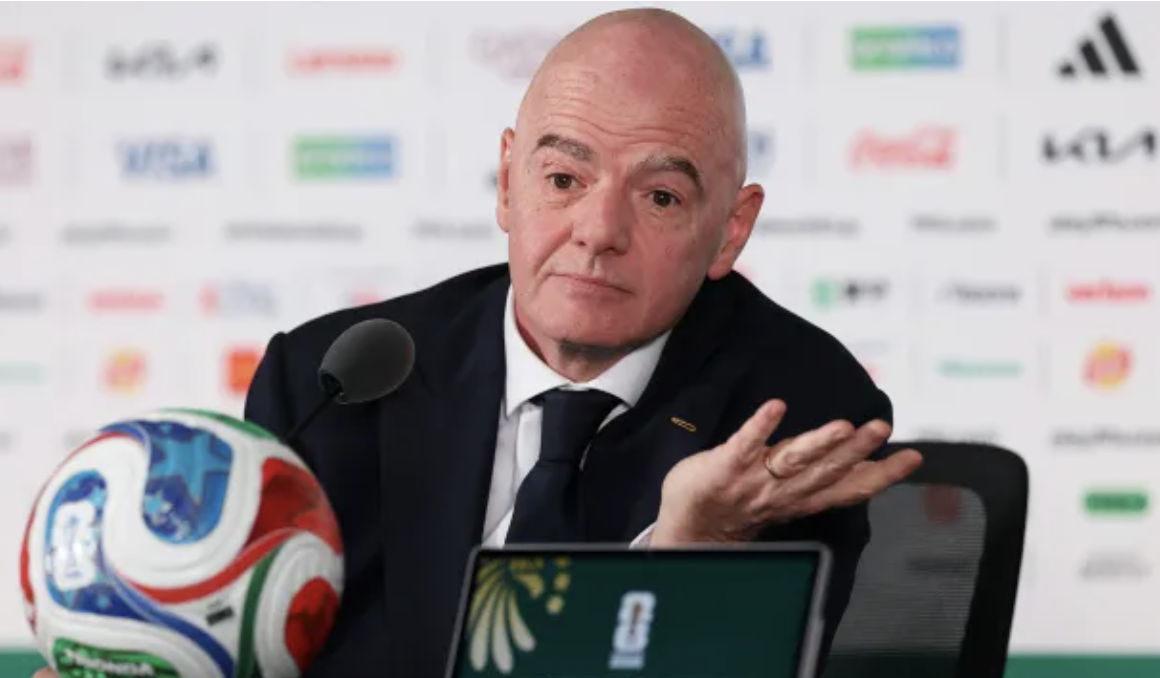
FIFA president Gianni Infantino is facing a new wave of criticism after UEFA, CONCACAF and the Asian Football Confederation accused the organisation of damaging trust through a lack of transparency.
In a joint open letter, the three confederations argued that the dispute was not simply about a failed commercial project. They said it raised fundamental questions about the integrity of football, the way FIFA is governed and the responsibility of those elected to lead the sport.
The FIFA Forward Enterprise Controversy
The latest conflict centres on the proposed FIFA Forward Enterprise, or FFE. The plan involved creating a separate company to manage the commercial and ticketing rights connected with FIFA competitions, including the World Cup and the Club World Cup.
FIFA had considered selling a minority stake in the new company to private investors. The organisation reportedly hoped to sell up to 21% of FFE and raise approximately $4.2 billion for football development.
The proposal immediately triggered opposition from several football confederations. Critics argued that the commercial rights of the World Cup should not be transferred, even partly, to private investors. They also questioned whether FIFA had the authority to make such a major decision without properly consulting its members.
After widespread criticism and threats of a boycott, FIFA abandoned the proposal. The decision was welcomed by UEFA, but European officials said that cancelling the project was only the beginning of the process of rebuilding confidence in FIFA.
Confederations Demand Greater Transparency
The joint letter from UEFA, CONCACAF and AFC stated that FIFA’s explanation did not go far enough. Although the organisation admitted that mistakes had been made during the FFE process, the three confederations said FIFA had failed to recognise that the proposal itself was fundamentally misguided.
According to the letter, the issue was not merely a procedural error. The attempt to sell a stake linked to the World Cup was described as a serious failure of judgement and a breach of trust between FIFA and the institutions it represents.
The confederations also criticised the way FIFA handled a meeting in Rabat, Morocco. They claimed that members of the FIFA Council and national associations were excluded, while only senior FIFA employees were invited to take part in the discussions.
Calls for an Independent Investigation
FIFA has promised to prepare a report for the next meeting of its Council, which is expected to take place in October. However, UEFA, CONCACAF and AFC believe that an internal review would not be sufficient.
The three organisations called for the process to be conducted by a fully independent third party. They argue that an investigation led by FIFA itself could not provide the level of credibility and impartiality required after such a serious governance dispute.
The confederations have also issued a legal warning that FIFA should preserve all documents connected with the FFE proposal. This includes internal correspondence, financial plans and records of meetings related to the project.
Pressure on Gianni Infantino
The open letter does not directly call for Infantino’s resignation. Nevertheless, people close to the opposition within world football reportedly believe that the message is aimed at persuading him to leave office before seeking another term.
The pressure on the FIFA president has increased despite the organisation’s public support for his leadership. Following a crisis meeting in Morocco, FIFA apologised to its members for mistakes in the handling of the commercial proposal but reaffirmed its backing for Infantino.
UEFA responded that FIFA’s continued support for the president had not solved the underlying problem. European officials said the organisation’s position did nothing to restore confidence in its leadership.
Could a FIFA Boycott Happen?
The dispute could eventually lead to a boycott of FIFA competitions. UEFA has already warned that European teams could refuse to participate in FIFA tournaments if concerns over the organisation’s governance are not addressed.
There have also been discussions about whether the confederations could organise alternative competitions. Such a move would allow players to continue competing even if some countries withdrew from FIFA events.
At this stage, no alternative tournament structure has been officially announced. However, the possibility demonstrates how seriously the current disagreement is being taken by FIFA’s regional partners.
A Divided Football World
Infantino still has important allies within international football. The Confederation of African Football has publicly backed him, while Argentina and Mexico have also joined the group of countries supporting the FIFA president.
The situation in Asia is more complicated. Several nations, including Qatar, the United Arab Emirates, Kuwait, the Philippines and Sri Lanka, have previously expressed support for Infantino. At the same time, the decision of AFC president Sheikh Salman to sign the joint letter suggests that significant divisions remain within the region.
UEFA remains Infantino’s most vocal opponent. The European confederation has already lost confidence in FIFA’s leadership and continues to demand major changes to the organisation’s decision-making process.
The Biggest Crisis of Infantino’s Presidency
The FFE controversy has developed into a much broader political struggle. What began as an attempt to restructure FIFA’s commercial operations has turned into a debate about transparency, accountability and the future of football governance.
Infantino has not announced plans to resign and continues to lead FIFA. However, the joint intervention by UEFA, CONCACAF and AFC represents one of the most serious challenges of his presidency.
The next FIFA Council meeting in October could become a decisive moment. It may determine whether the organisation can repair its relationship with the confederations or whether the dispute will develop into an open split within world football.